Being toothless during the process of getting new teeth can be uncomfortable and embarrassing, especially if we are in working life. Waiting for your new dental prosthesis is just annoying.
At this point, same-day dental implants come to our rescue.
Many people around you, even you, may have had dental implants. However, sometimes the waiting period for a new dental prosthesis is long and annoying. Therefore, same-day 'immediate' dental implants are an excellent option for many patients.
Let's take a closer look at this idea...
• Comparison of immediate and traditional implants
• Who is a candidate?
• What kind of dentist?
• Risks
• Benefits
• Procedure
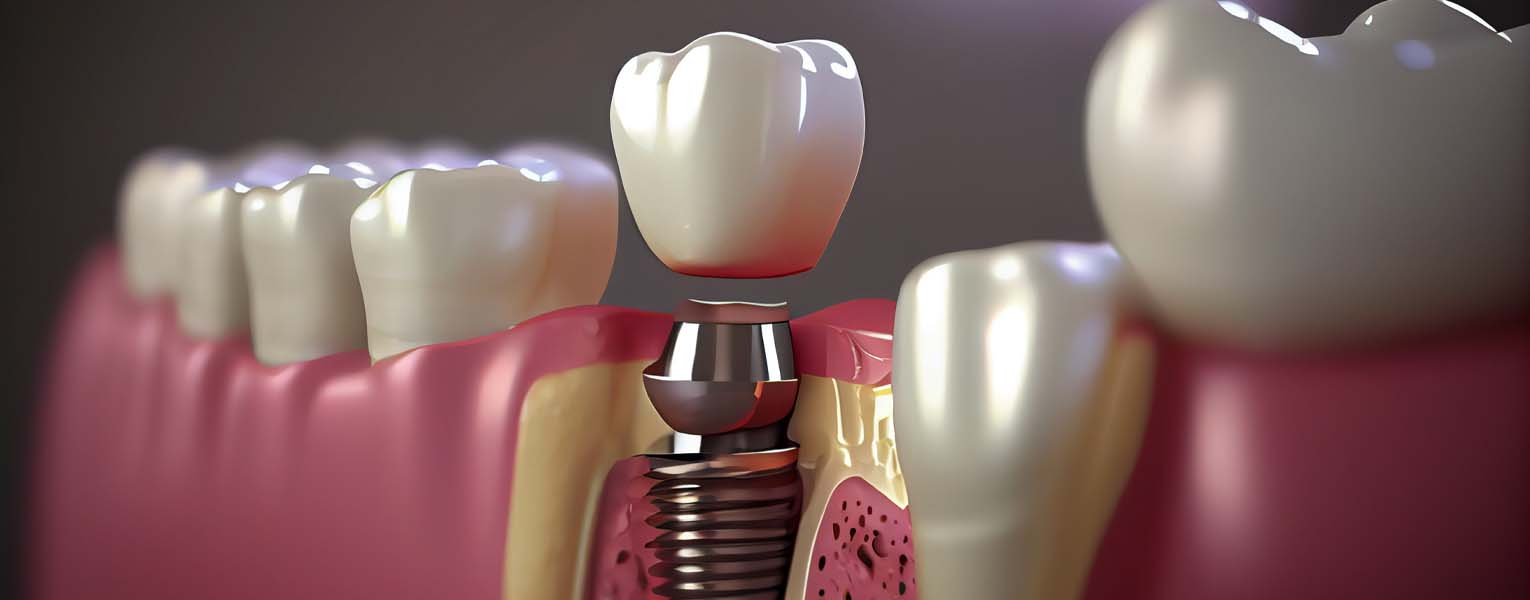
When your dentist talks about 'immediate' implant, they mean placing the implant at the same time as extracting the tooth and even placing a temporary prosthesis on it.
In traditional dental implants, this process works as follows; when you lose a tooth, you must wait at least 1 month before applying a dental implant to that area. At the end of this period, after the implant is placed, there is another 3-month waiting period. With the construction of your dental prosthesis, this total period is 4 to 5 months.
Although it emerged primarily for aesthetic purposes, it provides many advantages to the patient and dentist in terms of function and time. Also, immediately loaded implants can be functional. This means that with the implants you have on that day, you can eat soft foods and brush them. You can have a full dental prosthesis in one day. This means that this method can be valid not only for a single tooth but also for multiple teeth or all your teeth.
One type of immediately loaded dental implant is the All-On-4 concept. This procedure means placing four implants in the jawbone to support your entire prosthesis and placing a temporary prosthesis on the same day. In the All-On-4 procedure, the dentist places a temporary prosthesis on the implants for a natural appearance while the implants integrate with the bone.
The difference between immediate dental implants and traditional implants is the time between implant placement and prosthesis placement. In traditional implants, your dentist may want to wait at least 3 months before placing the prosthesis on the implant. Because your bone needs to accept and integrate with the implant.
In an immediately loaded dental implant, the dentist places a temporary porcelain immediately after placing the implant. In a traditional dental implant, it can take 3-6 months between implant placement and porcelain placement.
While a standard dental implant can take months to complete, an immediate dental implant can provide a new dental prosthesis on the same day.
So, what kind of dentist performs immediate dental implants?
Any dentist who performs dental implants can also perform same-day implants, but not every dentist can do them.
So first you should talk to your preferred dentist. The reason not every dentist performs immediate dental implants is that they do not want to take various risks. A complication can jeopardize the implant and the dentist's reputation.
Immediate dental implants have many associated risks, so you need to talk to your dentist to see if they are a good option for you.
If you want an immediate dental implant, you need to talk to your dentist to see if you are suitable. First of all, your dentist will likely put you through a very comprehensive screening process to see if you are suitable.
You must have good oral health and general physical health. This means that if you smoke, have an autoimmune disease, have chronic systemic disorders, or have hygiene problems, you cannot get immediate implants immediately.
Also, if you suffer from teeth grinding (bruxism) or clenching, immediate implants may not be the best solution for you, as these can affect the long-term prognosis and success rate of implant treatment.
Basically, if you want to get a dental implant - immediate or traditional - having a healthy body alone may not be enough. You must also pay attention to your oral hygiene. Yes, it has been reported that 10% of initially successful dental implants are lost within the first 10 years due to poor oral hygiene.
If you have good oral and physical health and do not smoke, you may be a candidate for immediate implants even if you have an autoimmune disease or use prescription bisphosphonate drugs (prescribed for advanced bone loss). To be sure, be sure to report these and talk to your doctor.
Here are some risks and potential complications associated with immediate dental implants. For these reasons, some dentists do not offer this service.
Implant Movement Increases Risk
For an immediate dental implant to be successful, the implant must not move at all. Therefore, the procedure itself is very sensitive. The dentist must place the implant in a way that it never moves. For this, in addition to the quality of the patient's jawbone, the experience of the physician comes to the forefront.
Only for Certain Situations
An immediate dental implant needs to integrate with strong bone and must likely withstand a certain torque (tightening force of the implant). The best candidates for immediate implants are people with relatively healthy and strong bones.
Dental Implant Surgery Contains Risks
The risks of immediate implants are no different from other dental procedures. When a dentist performs any surgical procedure (tooth extraction, gum surgery, etc.), there will be risks and possible complications. Risks such as implant failure, infection, and pain are all possible complications of implant surgery.
As with standard dental implants, the biggest risks of immediate dental implants include implant movement, implant failure, pain, and infection.
So how do they perform dental implants in one day?
First of all, your dentist will put you through a comprehensive examination. This is where your jaw and dental X-rays will be taken, they can answer your questions and summarize what will happen to you. Also, if deemed necessary, your dentist may perform some diagnostic tests such as CT scans and photographs of your mouth. They will analyze the images and essentially make a draft of your mouth and procedure plan.
Every part of the surgery must be planned with specific steps and objectives in mind. It is necessary to make unnecessary and very high promises to the patient.
Surgery
First, although dentists prefer local anesthesia, you may sometimes receive anesthesia that allows you to sleep during large-scale surgeries. After numbing, they will begin the procedure.
Using a guide, they will place the implant into the jawbone. This step is relatively quick.
Immediately after surgery, they will place a temporary dental prosthesis. Placing and fitting the prosthesis takes relatively much more time than placing the implant.
Immediate Dental Implant Pain
After the anesthesia wears off, you will feel some pain and discomfort. Pain, swelling, or some bruising is a very natural and normal result of this process.
The good news is that the dentist will prescribe painkillers and give you ice packs. The best thing you can do during this period is to make sure you take your painkillers and other medications regularly, and rest. Despite all this, if you have unexpected bleeding, swelling, or persistent pain, be sure to call your doctor.
The procedure for immediate dental implants is: administration of anesthesia, cleaning the surgical area, placing the implant into the jawbone, then immediately placing the dental prosthesis.
All these procedures may vary depending on your health condition, the strength of your jawbone, and the experience of your dentist.
However, remember that every dental surgery - even for dental implants - has pros and cons, benefits and risks, and after weighing all aspects of immediate implants, you and your dentist can choose the best one for you.
At the same time, the benefits of the immediate dental implant procedure are many. Here are some benefits of immediate dental implants.
Shorter Time
The obvious benefit of the immediate dental implant procedure is that it is completed in just one visit, sometimes several visits. This significantly reduces both the time spent in the dentist's chair and the time spent without teeth. Remember, traditional implants and prostheses can take 3 to 6 months.
Gums Adapt Better to the Prosthesis
Because the prosthesis is placed immediately on the implant, the gums usually grow around it and shape accordingly, making it look more natural. However, in traditional dental implants, after 3 months, the gum may need to be reopened and reshaped for prosthesis placement.
The benefits of immediate dental implants are clear: they are faster, involve one surgery, and the gums grow and shape better around the prosthesis.
We must not forget that while the success of traditional implants depends more on the physician, the success of immediate implants depends on the compliance of the physician and the patient. The success rate of immediate implants is almost the same as traditional implants.
Immediate implants allow you to get your new teeth faster. This means you don't have to spend a long time with missing teeth.
AESTHETIC DENTISTRY
TEETH WHITENING (DENTAL BLEACHING)
WIRELESS ORTHODONTICS (INVISALIGN)
ORTHODONTICS (BRACES)
ROOT CANAL TREATMENT (ENDODONTICS)
GUM TREATMENTS (PERIODONTOLOGY)
PEDIATRIC DENTISTRY (PEDODONTICS)
IMPLANT TREATMENT
ORAL, DENTAL AND JAW SURGERIES
FRENECTOMY (LIP-TIE / TONGUE-TIE RELEASE)
ALL-ON-4 TREATMENTS
FILLING TREATMENT
FIXED PROSTHETIC APPLICATIONS
Address
Merkez, Lise Cd. 18 C / D, 07980 Kemer/Antalya
Phone
05324401740