Dental bridges are literally a bridge to fill the gap of your missing teeth. They close the gap of a single missing tooth or multiple missing teeth.
The two natural teeth in front and behind the gap are used as bridge pillars. That is, if one tooth gap is to be filled, two of your teeth are cut and reduced to be used as pillars.
This is the basic idea, but bridges can vary depending on how many teeth are missing, where they are located in the mouth, and the type of bridge used.
Bridges, like any dental prosthesis, have pros and cons, risks, and benefits.
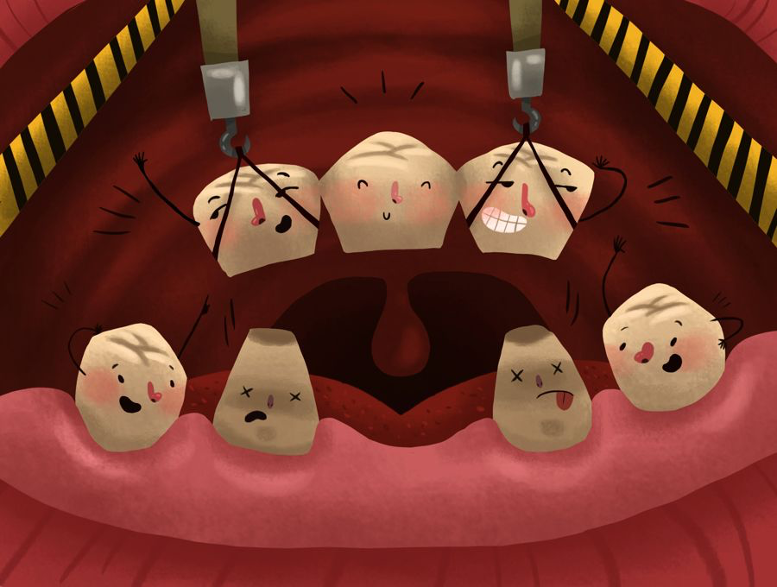
If you have missing teeth in your mouth, your dentist may mention several types of dental bridges. It may be better for you to be a little familiar with this topic in advance.
Traditional Dental Bridge
It is called 'traditional' because it is the most commonly used and best-known type. It is the most common method for completing one or more missing teeth. The teeth on both sides of the missing tooth are cut and reduced to make prosthetic teeth in the form of a bridge.
Traditional bridges can be used anywhere in the mouth as long as you have natural teeth on both sides of the missing tooth or teeth.
The biggest disadvantage is that the enamel of the tooth must be completely cut and reduced before placing your prosthesis. It should be remembered that since enamel does not grow back, these teeth will always be vulnerable and prone to decay.
Maryland Dental Bridge
A prosthetic bridge consisting of a metal or porcelain frame with teeth in front, usually attached to adjacent natural teeth with one or two wings.
Using a Maryland Bridge has many benefits. It is a conservative, low-risk replacement option that is very strong (thanks to the composite resin it is made of and its adhesion to your natural teeth). They can also look very realistic and can be a permanent option.
However, it can be difficult to perfectly match the fake tooth to the space left by the missing tooth. Therefore, your dentist may need to cut your surrounding teeth during placement to ensure the pontic(s) fit properly. Furthermore, this is the most expensive type of dental bridge.
Although adhesive dentistry has seen many developments in recent years, Maryland bridges have fallen out of favor for some time due to concerns about aspirating the prosthesis if it becomes loose due to chewing forces. This type of bridge is usually indicated only for replacing front teeth, but can be successful in the posterior region in certain cases.
Cantilever Dental Bridge
If you have only one natural tooth that can be used as an abutment, you can get a cantilever bridge.
They are very similar to traditional bridges, the main difference being that they have only one supporting tooth instead of a tooth on each side of the mouth.
It has similar pros and cons to traditional bridges, such as removing enamel. However, because there is only one supporting tooth, this can lead to problems such as a broken tooth or loosening of the crown.
Implant-Supported Bridges
Whether you are missing multiple teeth in a row or across your mouth, you may consider implant-supported bridges.
Although ideal when there are several missing teeth next to each other, it is also an excellent option for those missing teeth that are not close to each other.
As the name suggests, these bridges are secured with dental implants. Typically, you get one implant for each missing tooth, and the bridge attaches to these implants. If this is not possible, your dentist can secure all prostheses with just two implant-supported crowns. This would be a much more affordable option.
There are four main types of dental bridges, each serving a different purpose: Cantilever, Implant-Supported, Maryland, and Traditional.
After consulting your dentist and deciding on a dental bridge, you will schedule your first visit for the procedure.
During this first visit, the dentist will prepare the abutment teeth. This involves removing some enamel from adjacent teeth to allow crowns to be placed over them.
The dentist will then take an impression of your teeth to create the bridge, fake tooth, and crown using the best available material (usually porcelain, ceramic, and/or metal). Since the bridge will likely be made by a dental laboratory, you may not get the new one that day. Thus, your dentist will create a removable dental bridge for you to wear temporarily. It helps protect exposed teeth and still allows teeth in between.
During the second visit, your dentist will remove the temporary bridge and place the new, permanent dental bridge. It can be made of porcelain, metal, or both. They will check to ensure a proper fit and adjust as necessary.
You may need to make multiple visits for your dentist to continue checking fit and adjusting to ensure it stays secure and comfortable.
The dental bridge placement procedure is as follows: treatment of the area, removal of the temporary bridge, placement of the permanent dental bridge, and follow-up visits.
What is the cost of a dental bridge? How much will the insurance company cover? Will Medicaid pay for your dental bridge?
The answers to these questions depend on various factors, but the average cost of a dental bridge can range from $500 to $1,200 per unit (including abutments and pontics).
But here are a few of these determining factors:
• Materials
• Whether the bridge was made in a dental laboratory or in the dentist's office
• Type of dental bridge
• The knowledge, experience, and location of the dentist
• Your insurance plan or Medicaid coverage
To get a more accurate estimate of the cost of your dental bridge, it is best to talk to your dentist and insurance company to see what is covered.
The cost of a dental bridge can be $1,200 or more (depending on insurance and decision factors).
My Dental Bridge Hurts
Call your dentist and make an appointment. They can understand why it hurts and how to fix it. In the meantime, you can get a denture pain cream to help soothe discomfort.
My Dental Bridge is Loose
If you experience any of the following symptoms, you may have a loose dental bridge:
• The bridge moves when touched
• Your teeth and/or gums are very sensitive
• Problems with your bite
• Discomfort wearing the dental bridge
• A bad taste in your mouth (from food stuck between the bridge or related tooth decay)
If you have a loose bridge, the best option is to visit your dentist's office as soon as possible. However, sometimes this is not immediately possible, and you might want a solution in the meantime. Here is how you can fix a loose dental bridge at home if comfortable making adjustments yourself:
1. Buy dental cement from your local pharmacy
2. Clean the inside of the bridge
3. Dry your teeth and bridge
4. Follow the instructions that come with the dental cement (instructions vary, so this step is important)
5. Clean off excess cement after it hardens
My Dental Bridge Fell Out
If your dental bridge comes out and falls, you first want to talk to your dentist. They may want to see you in person. In the meantime, you can try these steps to put your replacement back in place:
1. Remove debris around the tooth/teeth/crown
2. Place the crown over the desired tooth to test fit
3. With little or no pressure, close your teeth together to ensure the crown is correctly aligned
4. Then remove the crown and fill part of it with denture adhesive
5. Place the crown back onto the tooth
6. Again, with little or no pressure, close your teeth to ensure it works correctly
7. Wipe away excess adhesive
Now you know the four main types of dental bridges. Just as a refresher: Cantilever, Implant-Supported, Maryland, and Traditional. Each serves a different purpose, so you and your dentist choose the most suitable option.
Hopefully, this guide has helped you know how to prepare mentally for the procedure. Knowing the steps and length of this process will help you prepare. In summary, your dentist will first treat the area, then remove the temporary bridge, place the permanent dental bridge, and schedule follow-up visits.
It depends on the type of bridge, the quality of the procedure, how your body reacts to and adapts to the replacements. However, generally speaking, a dental bridge can last between five and fifteen years.
The short answer is yes, it can be in some cases. Obviously, your dentist will use anesthesia, but you may experience some tooth and jaw pain after the procedure and in the following weeks. However, it is very common for patients to be perfectly comfortable after the procedure. Everyone's teeth react differently.
The simple answer: take it to your dentist for repair. Trying to repair it yourself is probably not a good idea.
Usually only a few days (see “How is the Dental Bridge Procedure?” above).
Typically, a bridge is made by a dental laboratory using porcelain with a metal framework or acrylic. Although sometimes the dentist's office may fabricate a bridge in-house.
Basically, you should clean and maintain your dental bridges like your natural teeth. This includes brushing and flossing. However, because it is a prosthesis, you will want to get under the fake tooth with a denture brush or oral irrigator.
AESTHETIC DENTISTRY
TEETH WHITENING (DENTAL BLEACHING)
WIRELESS ORTHODONTICS (INVISALIGN)
ORTHODONTICS (BRACES)
ROOT CANAL TREATMENT (ENDODONTICS)
GUM TREATMENTS (PERIODONTOLOGY)
PEDIATRIC DENTISTRY (PEDODONTICS)
IMPLANT TREATMENT
ORAL, DENTAL AND JAW SURGERIES
FRENECTOMY (LIP-TIE / TONGUE-TIE RELEASE)
ALL-ON-4 TREATMENTS
FILLING TREATMENT
FIXED PROSTHETIC APPLICATIONS
Address
Merkez, Lise Cd. 18 C / D, 07980 Kemer/Antalya
Phone
05324401740